
The illusion of being good enough
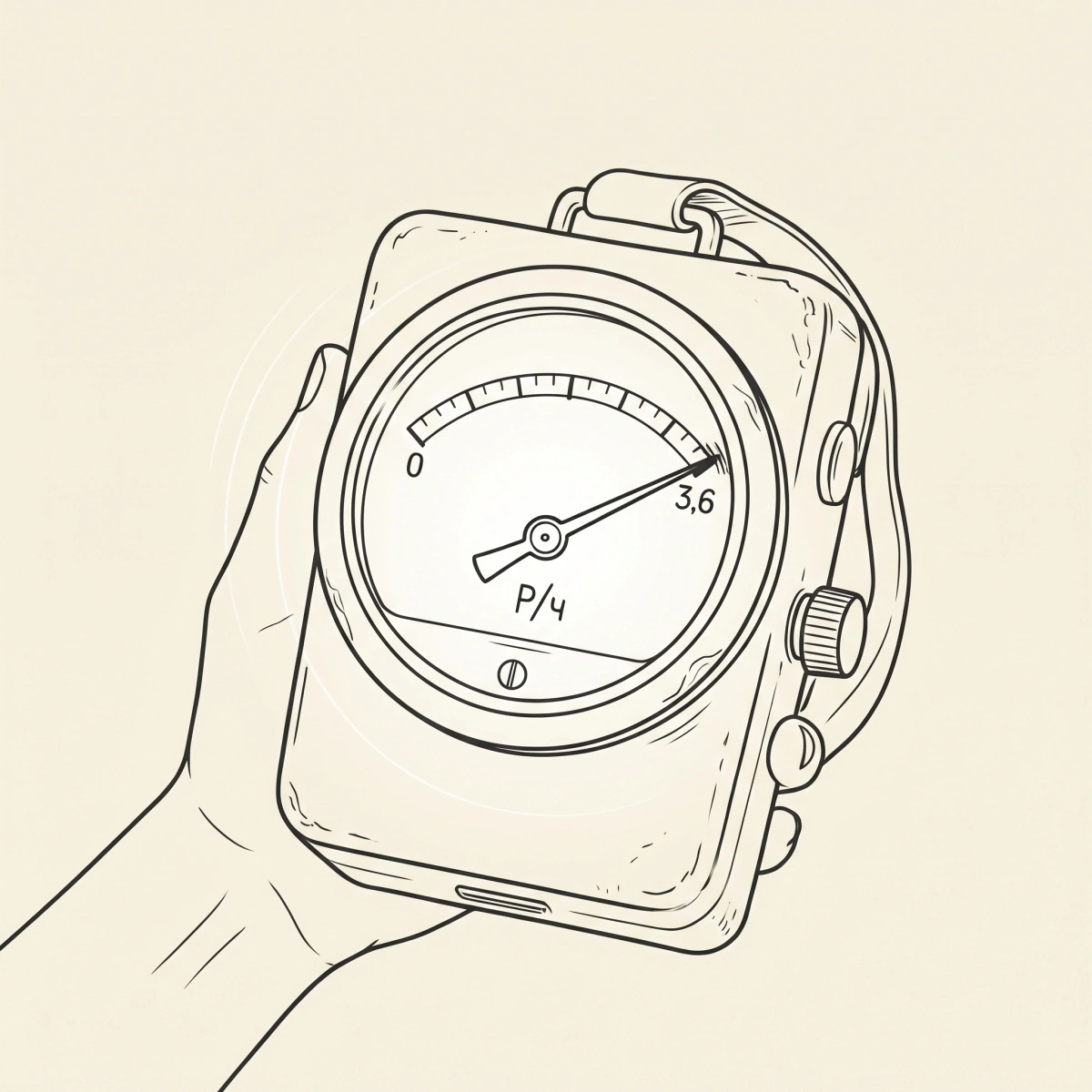
A few years ago, I watched a documentary on the Chernobyl disaster, and one chilling detail from the night of April 26, 1986, has stayed with me. Just minutes after Reactor 4 tore itself open, the men in the control room took a radiation reading. It came back at 3.6 roentgens per hour. While dangerous, that level was survivable – roughly equivalent to a nuclear worker’s entire annual limit in a single hour. Viewing it as a serious accident rather than an apocalypse, the operators concluded the core must still be largely intact, and hours slipped away before anyone evacuated the nearby city of Pripyat.
The number was accurate, yet the reading was a lie. Those standard-issue dosimeters physically could not display anything above 3.6. What the operators were looking at was not the actual radiation in the air, but the absolute ceiling of their instrument. Outside on the debris field, the true level sat between ten and twenty thousand roentgens per hour – lethal enough to kill an unprotected person in under two minutes. The needle had not settled because the danger was moderate; it had simply run out of dial.
Thinking about that moment makes me reflect on how we so often measure our own lives.
We all carry an internal dosimeter, and the trouble is always the range. My personal scale tops out at the people around me, and by that metric, I come back looking fine. It tops out at the person I was ten years ago, and I come back looking improved. It tops out at the visible sins my community finds most embarrassing, and because my name is not on that list, I come back feeling clean. Three instruments and three reassuring readings, yet none of them are capable of registering what is actually in the room.
In his second letter to the Corinthians (2 Corinthians 10:12), the Apostle Paul addresses this exact habit, pointing out how unwise it is when people measure themselves by themselves and compare themselves with their own circle. A scale built out of the same flawed material as the thing it measures will always return a comfortable, tolerable number.
Jesus illustrated this same trap in the parable of the Pharisee and the tax collector (Luke 18:11). Standing in the temple, the Pharisee prayed about how thankful he was not to be like other people – naming robbers, evildoers, adulterers, and even the tax collector standing nearby. Look closely at his chosen instrument: another flawed human being, conveniently selected. The Pharisee’s self-reading was excellent, yet he walked away unjustified, while the tax collector who refused to rely on human comparison went home forgiven.
When it comes to our spiritual state, the problem runs even deeper than a faulty gauge. The operators at Chernobyl were genuinely ignorant of the true numbers, whereas our own hearts actively work to hide the truth from us. The Psalmist asks who can possibly discern their own errors and pleads with God to forgive hidden faults (Psalm 19:12). Likewise, the prophet Jeremiah warns that the human heart is deceitful above all things and beyond cure, asking who can truly understand it (Jeremiah 17:9).
Our internal instrument is not just low-range; it is biased toward the result. Because the one being measured is also the one holding the clipboard, we become experts at producing a reassuringly low number. We see the ultimate danger of this self-deception in the message to the church in Laodicea (Revelation 3:17), where the people boast of being rich, comfortable, and in need of nothing, completely blind to the reality that they are spiritually wretched, pitiful, poor, blind, and naked. Like that control room in 1986, it is entirely possible to be calm, confident, and wrong by orders of magnitude.
Where, then, do we find an instrument with no ceiling? We will never find it in a stricter list of rules, because checklists have ceilings too. We only find the true measurement when we stand before a holy God, and no one in Scripture ever walked away from that encounter with a comfortable reading. When the prophet Isaiah caught a glimpse of the Lord seated on His throne (Isaiah 6:5), he immediately cried out in despair, realizing he was ruined as a man of unclean lips living among a people of unclean lips, because his eyes had seen the King, the Lord Almighty. By the standards of his generation, Isaiah was a righteous man, but in the presence of the King, the needle went completely off the scale.
Seeing the true reading sounds like terrifying news until we understand its purpose. At Chernobyl, discovering the real number meant immediate evacuation, and for those closest to the core, that realization came too late. In the gospel, however, the true reading of our hearts is meant to drive us straight into the arms of our Rescuer. Because of what Jesus has done, the writer of Hebrews invites us to approach God’s throne of grace with confidence, knowing we will receive mercy and find grace to help us in our time of need (Hebrews 4:16).
We can step forward with confidence – not because our sin reading is small, but because Jesus stepped into the core and absorbed the lethal dose on our behalf. That is the life-saving difference between a reactor and the cross. When we stop trusting our broken human scales and face the real reading, we discover that our condition is not only survivable through Christ, but it is the very truth that leads us home to Him.