
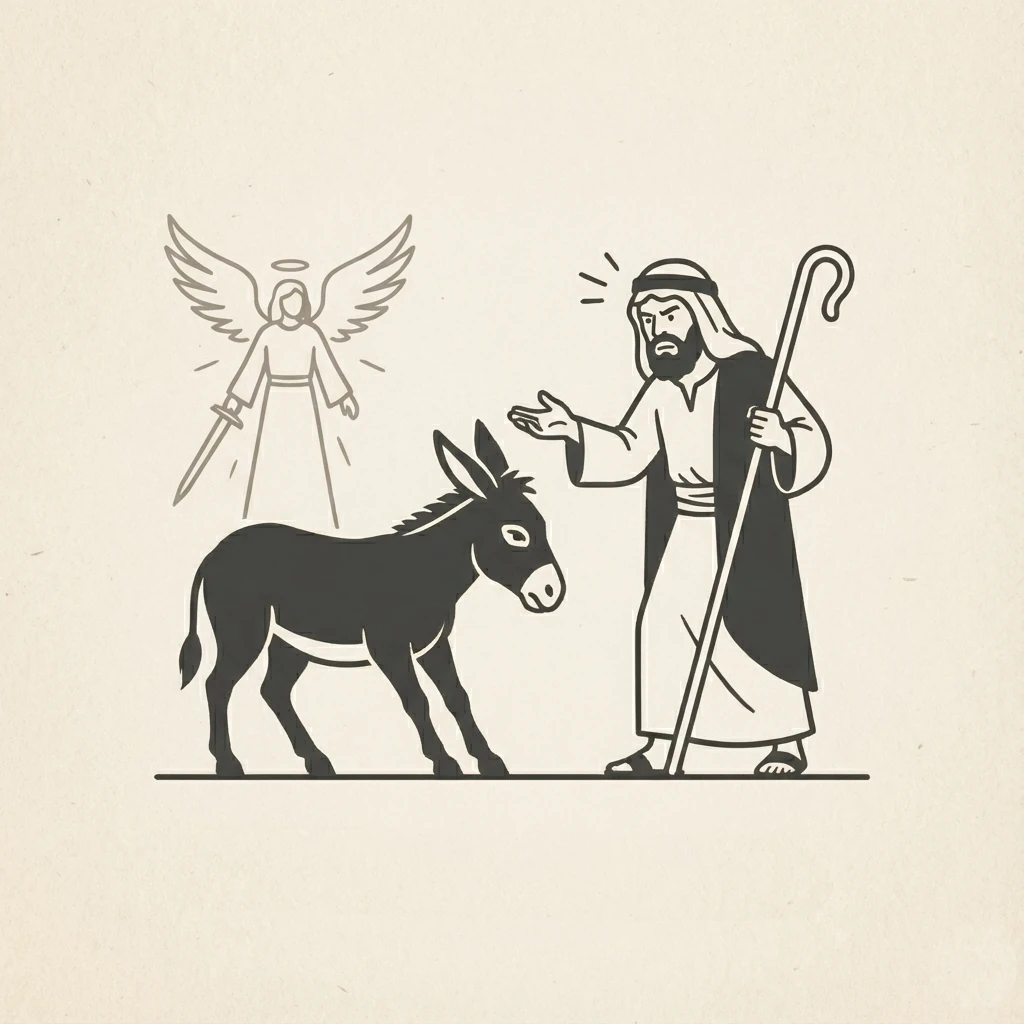
The Hollow Obedience
Balaam never openly defied God’s word. When King Balak sent messengers with payment to curse Israel, Balaam replied:
I could not do anything great or small to go beyond the command of the LORD my God(Numbers 22:18 NIV)
God permitted him to go after Balak sent a second delegation of more distinguished officials with promises of greater reward, and Balaam persisted in seeking permission despite God’s earlier refusal — a concession of His permissive will, allowing Balaam’s greed-driven desire to play out while still binding him to speak only what God decreed(Numbers 22:35). On the surface, Balaam obeyed — blessing Israel instead of cursing them(Numbers 23–24).
Yet Scripture reveals another side of Balaam:
They were the ones who followed Balaam’s advice and enticed the Israelites to be unfaithful to the LORD… so that a plague struck the LORD’s people(Numbers 31:16 NIV).
Unable to curse, Balaam counselled Balak to corrupt — sending Moabite women to lure Israel into idolatry and immorality(Numbers 25:1–3). His heart was for sale — he obeyed the letter but defied the spirit. His name became a byword for spiritual compromise:
There are some among you who hold to the teaching of Balaam…(Revelation 2:14 NIV).
Balaam’s end was not in prophetic honour, but death among Israel’s enemies (Numbers 31:8). As a non-Israelite prophet, presumably dependent on sources of darkness(Numbers 22:7 NIV) for his prophetic gift, he had no excuse — once God revealed Himself, Balaam was accountable to respond with loyalty, yet he chose self-interest. Outward obedience can mask an inwardly divided heart, but God weighs the motives(Proverbs 16:2).
Guard your heart. Actions may impress people, but the Lord seeks truth in the inward parts(Psalm 51:6).
Obedience without loyalty is just a hollow performance.