
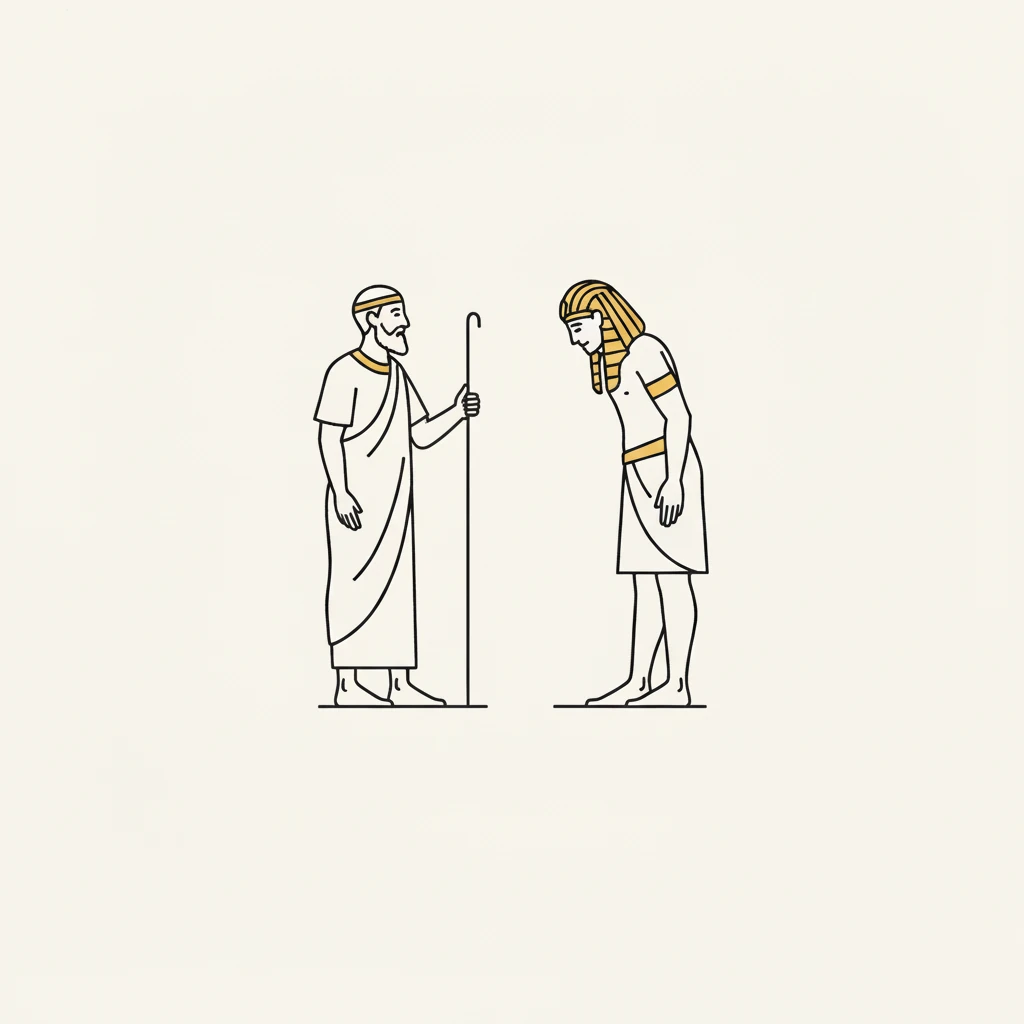
The Unlikely Blessing
Genesis 47 : 7 – 10 (NIV)
7. Then Joseph brought his father Jacob in and presented him before Pharaoh. After Jacob blessed Pharaoh,….. 10. Then Jacob blessed Pharaoh and went out from his presence.
The verb translated blessed is the Hebrew bā·rak, the Old Testament’s principal word for imparting divine favor, appearing more than three hundred times from Genesis to Malachi. The same root frames God’s promise to Abram — “I will bless those who bless you … and all peoples on earth will be blessed through you” (Genesis 12 :3 NIV) — underscoring that Jacob’s act in Pharaoh’s palace is no mere greeting but a covenant-charged benediction.
By every earthly metric the scene is upside down: a famine-stricken refugee pronounces a blessing over the most powerful and prosperous king of his day, yet Heaven’s economy does not consult bank balances or political charts before it releases favor.
Jacob can speak that word because he carries the Abrahamic covenant — the pipeline through which God intends to pour life into the nations — and covenant authority always outranks temporal power.
If Jacob, an Old Testament patriarch — frail, landless, and dependent on Egypt for survival — could still impart God’s favor to Pharaoh, how much more should we, the New-Testament bearers of the covenant sealed by Christ, recognize the treasure we carry and release words and deeds of blessing wherever we go? We are “jars of clay” holding “this all-surpassing power” (2 Corinthians 4 :7 NIV); many of us walk Pharaoh’s corridors daily, scarcely aware that the Spirit within longs to overflow. Let the unlikely blessing continue through you.