
Judah
The story of Judah is not a sanitized tale of immediate perfection. It is a raw, messy, and profoundly beautiful picture of human failure meeting divine grace. To understand the Lion of the tribe of Judah, we first have to look at the man himself – a man who started deeply flawed but was ultimately transformed by the grace of God.
Here is a look at the broken, beautiful journey of Judah.
Born from Rivalry, Destined for Praise
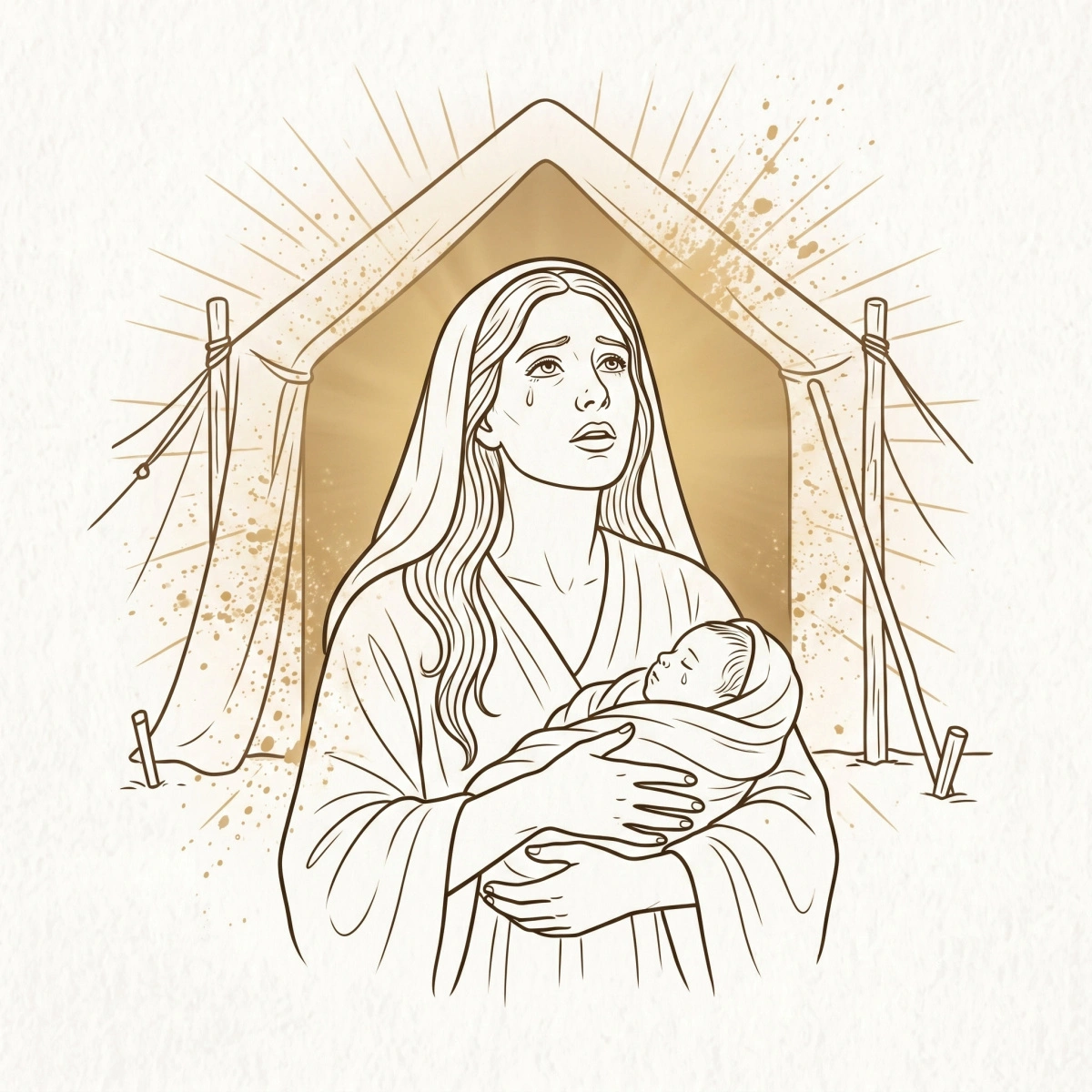
Judah’s story begins in a household defined by heartbreak and intense rivalry. His mother, Leah, was the unloved wife, constantly competing with her sister Rachel for Jacob’s affection. With the birth of her first three sons, Leah hoped to finally win her husband’s heart, but the pain of rejection remained.
However, when her fourth son was born, something shifted in Leah’s spirit. She stopped looking at Jacob and looked to the Lord. Genesis 29:35 (NIV) records this shift:
“She conceived again, and when she gave birth to a son she said, ‘This time I will praise the Lord.’ So she named him Judah. Then she stopped having children.”
The name Judah literally means “praise.” Even in a fractured home, God was already laying the foundation for a lineage of worship.
The Jealous Brother
Fast forward to Judah’s adulthood, and we see that the toxic rivalry of his parents’ generation had bled down into the brothers. When Jacob showed blatant favoritism to Rachel’s firstborn, Joseph – repeating the exact same destructive generational sin seen when Abraham favored Isaac over Ishmael, and Isaac favored Esau over Jacob – the brothers were consumed by jealousy.
When the plot to murder Joseph was hatched, it was Judah who intervened. Realizing that Joseph was his own flesh and blood, Judah suggested they sell him to passing merchants instead of shedding his blood. Genesis 37:26-27 (NIV) states:
“Judah said to his brothers, ‘What will we gain if we kill our brother and cover up his blood? Come, let’s sell him to the Ishmaelites and not lay our hands on him; after all, he is our brother, our own flesh and blood.’ His brothers agreed.”
While he spared his brother’s life, his actions were still driven by jealousy and a cold, calculated pragmatism. He was willing to be rid of his brother for twenty shekels of silver.
The Tamar Incident: Failure and Repentance
Perhaps the darkest chapter of Judah’s life is the incident with Tamar. After failing to honor his family obligations to his widowed daughter-in-law, Judah unwittingly sleeps with her when she disguises herself as a prostitute. It is a story of moral bankruptcy and deceit.
Yet, when the truth comes to light and Judah is confronted with his own hypocrisy, he does something remarkably rare for a patriarch in power: he repents. Instead of making excuses, Judah publicly confesses, declaring, “She is more righteous than I.”
This raw, unvarnished repentance echoes centuries later in his descendant, King David. When David committed adultery with Bathsheba and was confronted by the prophet Nathan, he didn’t hide behind his crown; he broke down in repentance. Both men were deeply flawed, but both possessed a heart willing to confess and turn back to God.
A Changed Man: The Sacrificial Plea
Years later, a severe famine forces the brothers to travel to Egypt, setting the stage for Judah’s ultimate transformation. The Egyptian governor (secretly Joseph) demands that they bring their youngest brother, Benjamin, back with them.
Knowing this could kill their father, Jacob, Judah steps up as a changed man. In Genesis 43:8-9, he pledges his own life as a guarantee for Benjamin’s safety. When Benjamin is later framed for theft and faces lifelong slavery, Judah delivers one of the most passionate speeches in all of Scripture (Genesis 44:18-34). He begs to take Benjamin’s place, offering himself as a substitute slave so that his father will not have to suffer the loss of another beloved son.
The man who once coldly sold a brother into slavery is now willing to lay down his own life to save one. This sacrificial plea stands as the definitive biblical evidence of his deeply transformed character and opens the door for the reconciliation of their entire family.
The Messianic Blessing and the Spirit’s Anointing
When Jacob gathers his sons on his deathbed, he bypasses his three oldest sons – Reuben, Simeon, and Levi – due to their past sins of defiling Jacob’s bed and their violent anger (Genesis 49:3-7). Because the older brothers disqualified themselves, the mantle of leadership falls to the fourth-born, Judah. Jacob bestows a profound prophetic blessing upon him (Genesis 49:8-12), declaring that Judah is a “lion’s cub,” that his brothers will bow down to him, and crucially, that the royal scepter will never depart from his lineage.
God’s favour on this tribe continued to manifest. Generations later, when God needed a master craftsman to build His holy Tabernacle in the wilderness, He chose Bezalel – a descendant of the tribe of Judah. Scripture notes that Bezalel was the very first person explicitly said to be filled with the Spirit of God (Exodus 31:3), chosen to construct the dwelling place of the Almighty.
The Ultimate Fulfillment: The True Lion of Judah
When we look at the lineage of Jesus Christ in the Gospel of Matthew, it is startling in its honesty. God the Father did not choose a pristine, untainted bloodline for His one and only Son. He allowed Jesus to be born into the tribe of Judah, complete with its history of rivalry, betrayal, and the incestuous lineage of Tamar.
Why? Because Jesus did not come for the perfect; He came to identify with the transgressors. Though Jesus Himself was entirely without sin, He chose to step directly into the mess of human history.
By being conceived by the Holy Spirit, Jesus broke the generational chains of sin that plagued Judah’s line. He became the ultimate fulfillment of Judah’s story. Just as Judah offered himself as a substitute for his guilty brother in Egypt, Jesus offered Himself as the eternal substitute for a guilty world on the cross. This entire story stands as the ultimate testament to the restorative power of God. It reminds us that our past failures do not have to dictate our future legacy.
God can take a jealous, flawed man from a broken home and transform him into a leader willing to sacrifice himself out of love. If God can bring the saviour of the world out of the messy, imperfect tribe of Judah, there is no life too broken for Him to redeem, use, and ultimately fill with His praise.